



factory prices high precision ibr trapezoid roofing machine
In the highly competitive steel manufacturing industry, precision and efficiency are paramount. The automatic gauge control system (AGC) has emerged as a critical technology in modern cold rolling mills , ensuring consistent strip thickness, improved product quality, and enhanced operational efficiency. By integrating advanced AGC controllers with hydraulic automatic gauge control mechanisms, manufacturers can achieve tighter tolerances, reduce material waste, and optimize rolling speeds. This article explores the role of automatic gauge control in strip rolling , the evolution of AGC systems , and their impact on the performance of automatic gauge control cold rolling mills . The Fundamental Role of AGC in Cold Rolling Mills The automatic gauge control system is designed to maintain uniform thickness across the entire length and width of rolled strips. Variations in thickness can lead to product defects, increased scrap rates, and reduced mechanical properties in the final product. In a cold rolling mill , the AGC system continuously monitors and adjusts rolling forces to compensate for material inconsistencies, thermal expansion, and mill stretch. Modern AGC controllers utilize real-time feedback from sensors such as X-ray gauges, laser micrometers, and load cells to make instantaneous corrections. This ensures that the automatic gauge control cold rolling mill produces high-precision strips for demanding applications, including automotive, aerospace, and electronics industries. Hydraulic Automatic Gauge Control: Precision Through Advanced Actuation One of the most significant advancements in automatic gauge control in strip rolling is the adoption of hydraulic automatic gauge control (HAGC) systems. Unlike traditional screw-down mechanisms, hydraulic AGC provides faster response times and higher force accuracy, enabling tighter thickness control. Key advantages of hydraulic automatic gauge control include: High dynamic response: Hydraulic actuators can adjust roll gaps in milliseconds, compensating for rapid variations in material hardness or incoming strip profile. Improved strip flatness: By maintaining consistent rolling pressure, HAGC minimizes edge drop and center buckles, ensuring superior flatness. Adaptability to high-speed rolling : Modern automatic gauge control cold rolling mills operating at high speeds rely on hydraulic systems to maintain precision without sacrificing productivity. The integration of hydraulic AGC has revolutionized strip rolling, allowing manufacturers to produce ultra-thin, high-strength steel with minimal deviation. Automatic Pressure Control and Its Synergy with AGC A critical component of an effective AGC system is automatic pressure control , which regulates the hydraulic forces applied to the work rolls. By maintaining optimal pressure levels, the system prevents over-rolling or under-rolling, both of which can lead to gauge variations. In an automatic gauge control cold rolling mill , pressure control works in tandem with the AGC controller to: Compensate for roll wear: As rolls degrade over time, the system adjusts pressure to maintain consistent strip thickness. Handle varying material properties: Different steel grades require different rolling forces, and automatic pressure control ensures seamless transitions. Enhance mill stability: By preventing sudden force fluctuations, the system reduces vibrations and improves strip surface quality. This synergy between automatic gauge control and automatic pressure control is essential for achieving high yields and minimizing downtime. Evolution of AGC Controllers: From Analog to AI-Driven Systems The AGC controller has undergone significant advancements, evolving from basic analog systems to sophisticated digital and AI-based solutions. Modern controllers leverage: Model-based predictive control (MPC): Uses mathematical models to anticipate and correct gauge deviations before they occur. Adaptive learning algorithms: Continuously optimize rolling parameters based on historical data and real-time feedback. Integration with Industry 4.0: Cloud-based analytics and IoT-enabled sensors allow for remote monitoring and predictive maintenance. These innovations have made automatic gauge control in strip rolling more reliable, reducing human intervention and improving repeatability. Challenges and Future Trends in AGC Systems Despite their advantages, AGC systems face challenges such as: Sensor accuracy and calibration: Even minor measurement errors can lead to gauge deviations. Handling of advanced high-strength steels (AHSS): These materials require precise force control to avoid cracking or shape defects. Future developments in automatic gauge control cold rolling mills may include: Enhanced AI-driven AGC: Machine learning could further optimize rolling parameters in real time. Hybrid electro-hydraulic systems: Combining electric and hydraulic actuation for greater efficiency. Advanced material modeling: Simulating rolling behavior to preemptively adjust AGC settings. The integration of AGC systems in modern cold rolling mills has transformed strip production, enabling manufacturers to meet stringent quality standards while maximizing efficiency. From hydraulic automatic gauge control to AI-enhanced AGC controllers , these systems ensure precise thickness control, superior strip flatness, and reduced material waste. As the demand for high-strength, lightweight steel grows, continued innovation in automatic gauge control in strip rolling will be essential to maintaining competitiveness in the steel industry. The future of automatic gauge control cold rolling mills lies in smarter, faster, and more adaptive systems that push the boundaries of precision manufacturing.

We have successfully executed over 500
projects around the world,
many first-of-their-kind
research projects and products in China, including
We have successfully executed over 500
projects around the world,
many first-of-their-kind
research projects and products in China, including
-
2004
The 1st hydraulic AGC system for hot rolling of ribbon steel
-
2006
The 1st AFC system used for 1450mm skin pass mill
-
2009
The 1st 5-stand tandem line with 2-stand POR & Uncoiler for 650mm ribbon steel
-
2012
The 1st reversing mill for 1380mm strip
-
2016
The 1st soft-rolling system used in skin pass mill
-
2019
The 1st fully automated medium-width tandem cold rolling mill
-
2021
The 1st 5000KN Twin-stand double skin pass mill
-
2022
The 1st coupled pickling line & tandem cold mill with two modes - big roller & small roller
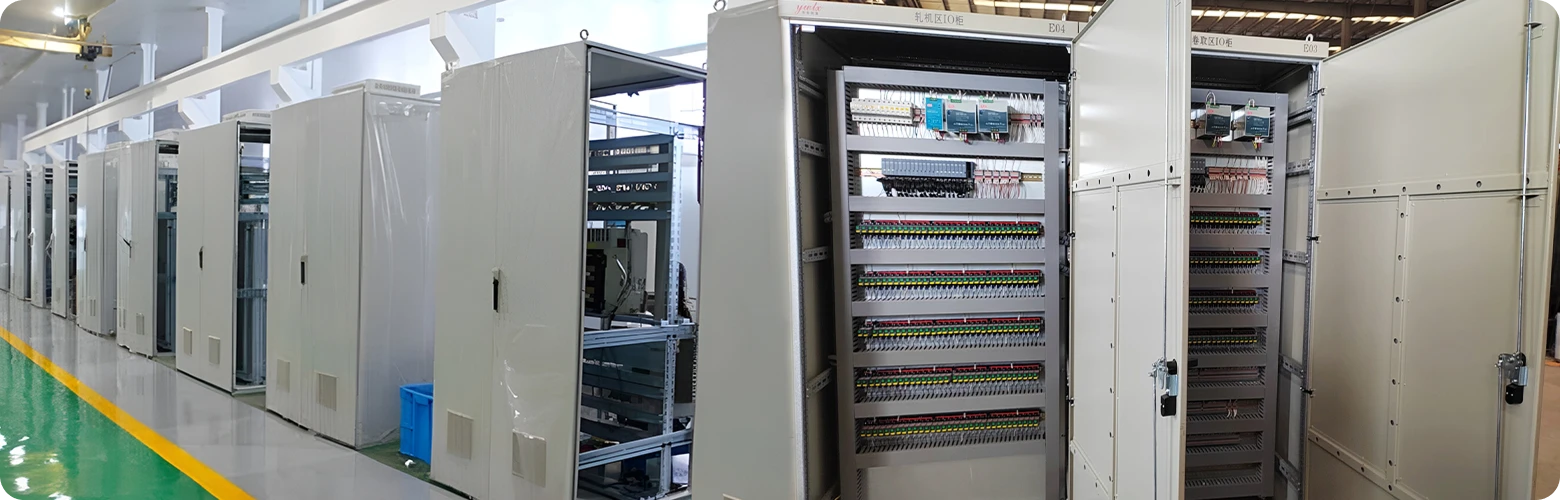
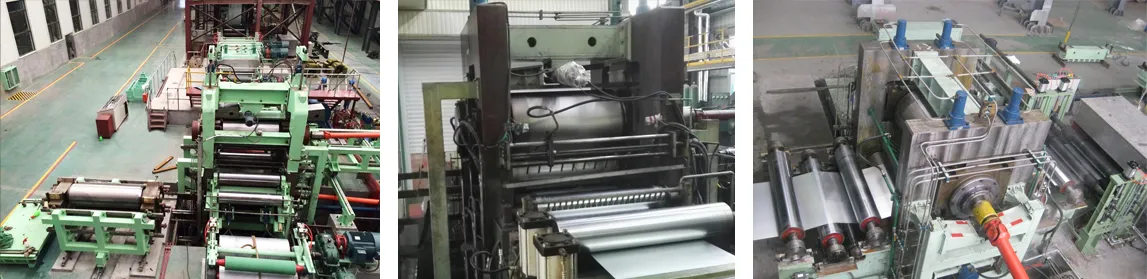
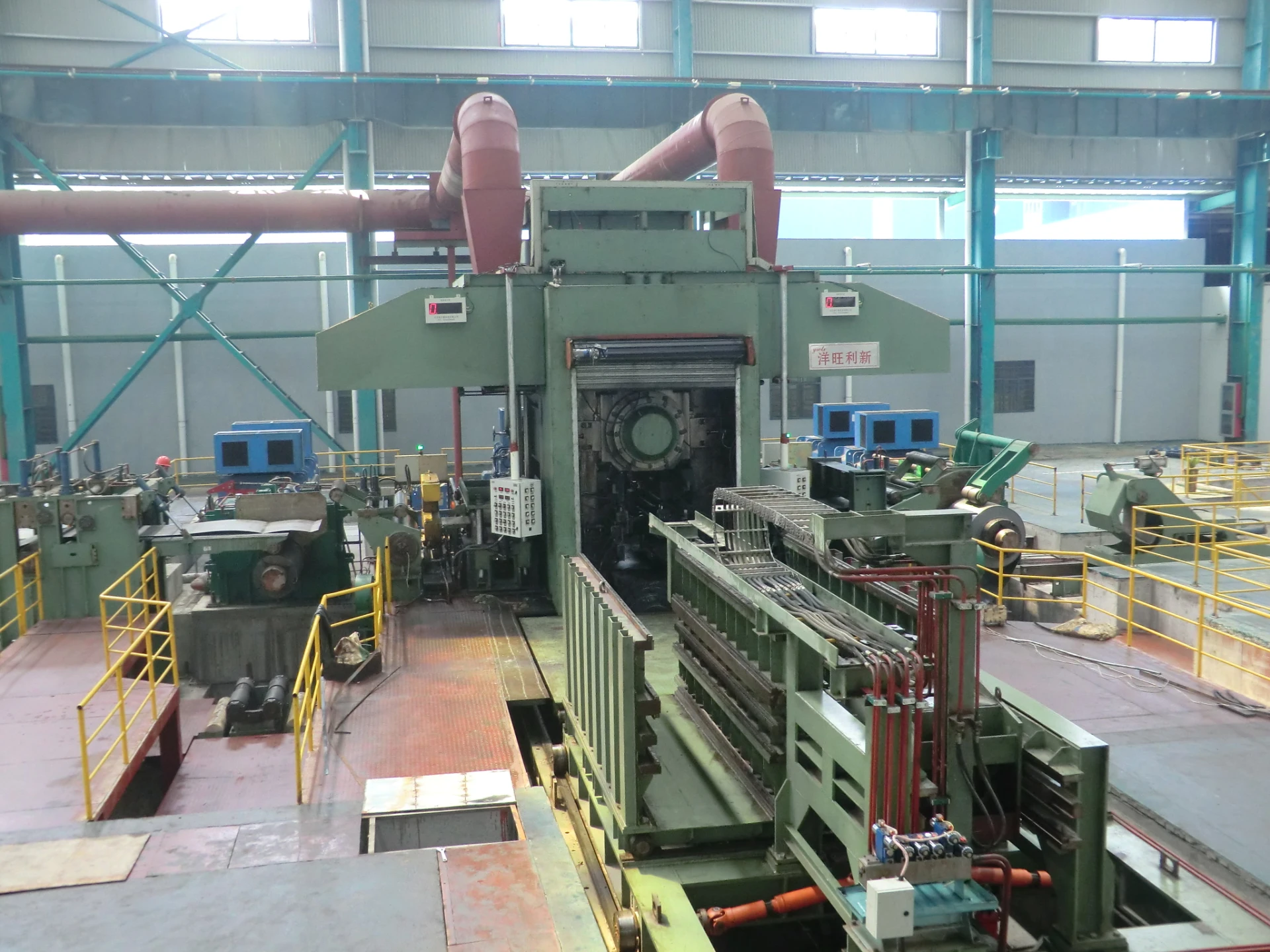
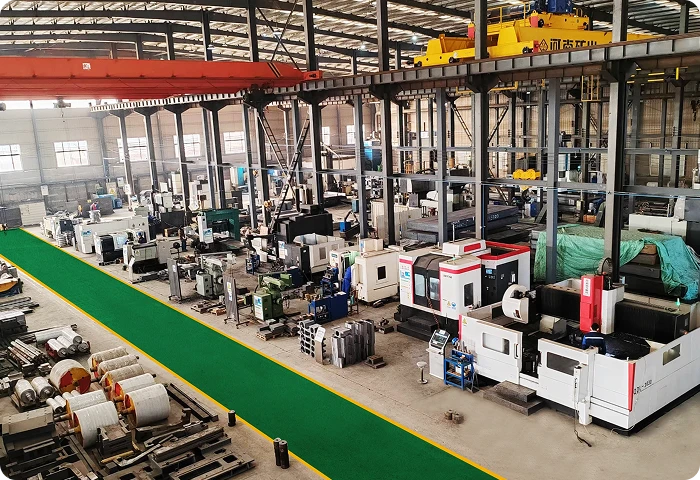
Yang Wang Li Xin operates a state-of-the-art facility over 66,000 square meters,and our manufacturing facility is fully equipped with high-tech machinery and high-capacity cranes. This enables us to handle large work pieces measuring 4.5m in width, 10m in length, and 1.5m in height, guaranteeing our capacity to produce 1800mm skin-pass mills and 1450mm rolling mills. The individual piece can weigh up to 100 tons.

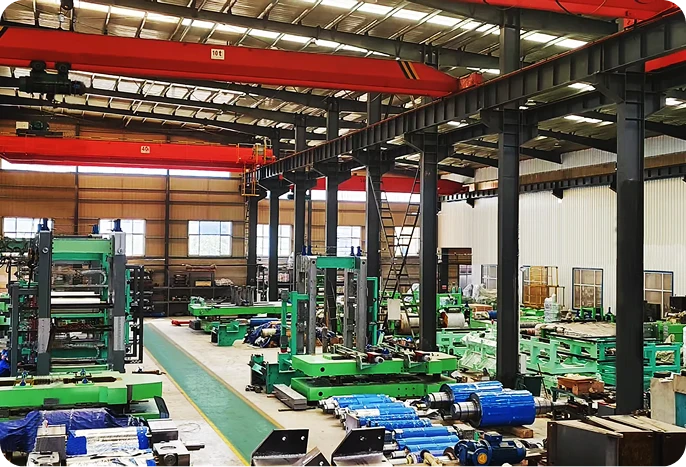

Quality is fundamental to the enterprise survival. We have established a comprehensive and meticulous quality management system and have successfully obtained ISO14000 certification. Starting from the design source, it supervises the entire production cycle, including design, procurement, processing, assembly, in-factory testing, installation, and online commissioning. The workshop is equipped with measuring tools like vernier calipers, spectrometers, hardness testers, and ultrasonic flaw detectors. They are used to check materials and control tolerances to ensure the final equipment meets or exceeds requirements. All products have a unique code, This enables the easy identification and traceability of the equipment components and ensures full control of quality.


-
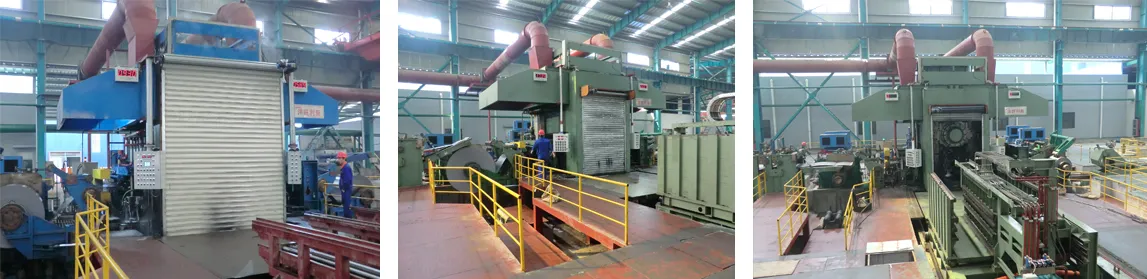 Cladding Rolling Mill - YWLX | Cold Rolling Technology, Energy EfficiencyIntroduction to YWLX and Cladding Rolling Mill Founded as Beijing Yang Wang Li Xin Sci&Tech Co., Ltd. (YWLX), the company has become a leader in developing advanced metal cladding solutions. Specializing in cold rolling cladding technology, YWLX offers a sustainable and efficient alternative to traditional methods like hot rolling and explosive cladding. This article explores the technical feature
 -
 Cladding Rolling Mill - Beijing Yang Wang Li Xin Sci&Tech | Cold Rolling Technology, Metal BondingIntroduction The Cladding Rolling Mill represents a significant advancement in metal bonding technology, offering a sustainable and efficient solution for producing high-quality cladding strips. Developed by Beijing Yang Wang Li Xin Sci&Tech Co.,Ltd. (formerly known as 石家庄洋旺机电技术有限公司 ), this technology addresses the limitations of traditional methods such as hot rolling and explosive cladding. By l
 -
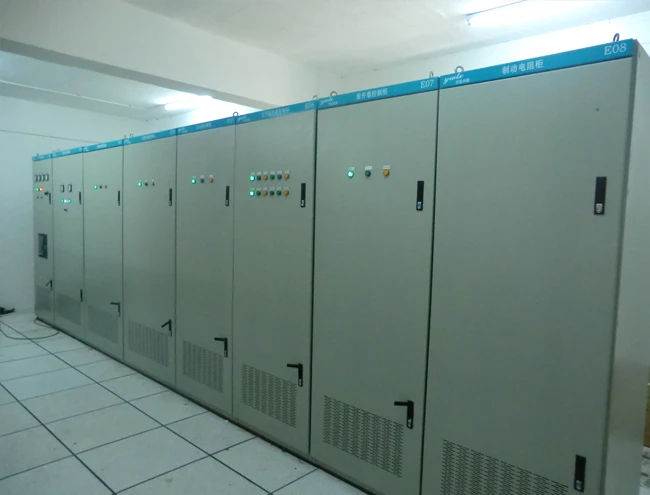 Cladding Rolling Mill-YWLX|Cold Rolling Technology, High Yield ProductionCladding Rolling Mill is a cutting-edge solution developed by YWLX (石家庄洋旺机电技术有限公司), a leading company in metal processing technology. This innovative system leverages cold rolling processes to produce high-quality cladding strips, addressing the limitations of traditional methods like hot rolling and explosion cladding. In this article, we will explore the technical features, advantages, applicati


